

Baylor University Announces New Biomedical Engineering Undergraduate Degree
The degree, housed in the School of Engineering and Computer Science (ECS), will launch in Fall 2026 and build upon Baylor’s established strengths in mechanical engineering and electrical and computer engineering.
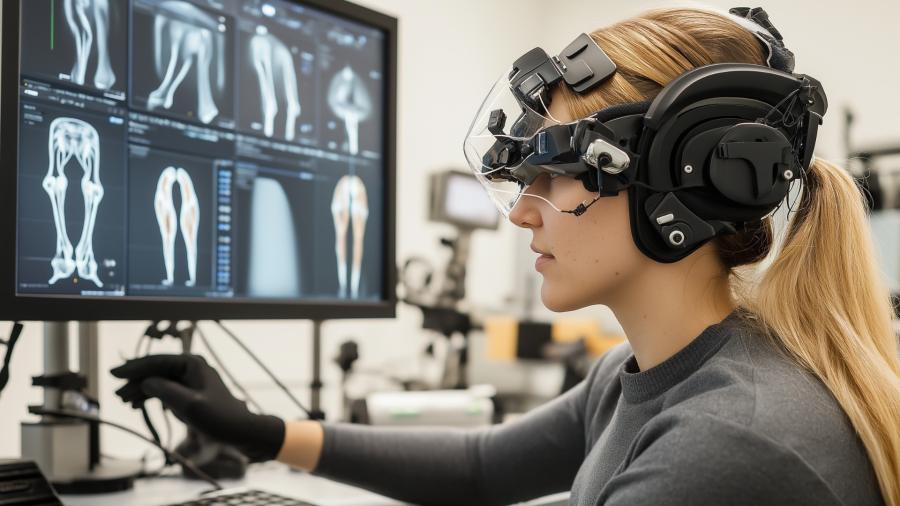
WACO, Texas — During its regular February meeting, the Baylor University Board of Regents approved the Bachelor of Science in Biomedical Engineering (B.S.B.M.E.), a degree program designed to meet rising national demand for biomedical engineers while advancing priorities outlined in the University’s strategic plan, Baylor in Deeds. The plan identifies Health & Engineering as one of four cross‑cutting imperatives shaping Baylor’s growth across four commitments.
The degree, housed in the School of Engineering and Computer Science (ECS), will launch in Fall 2026 and build upon Baylor’s established strengths in mechanical engineering and electrical and computer engineering. ECS already offers a master’s degree in Biomedical Engineering, and in leveraging the dozen faculty already researching and teaching within the Signature Research Area of Health, Bioinformatics and Bioengineering, the new degree program is well-positioned for efficient launch and long‑term sustainability.
Additionally, ECS is hiring new faculty in Biomedical Engineering with expertise in Artificial Intelligence to enhance the School’s ability to prepare students to thrive in careers involving the quickly-evolving technology.
READ ABOUT BIOMEDICAL ENGINEERING ADVANCES AT BAYLOR IN ECS MAGAZINE
“We are excited to launch Baylor University’s long-awaited Bachelor of Science in Biomedical Engineering program this Fall,” said Daniel Pack, Ph.D., dean of the School of Engineering and Computer Science. “This achievement reflects the extraordinary dedication of our faculty, and we look forward to welcoming our inaugural cohort of students. The program strengthens Baylor’s engineering education and research at the intersection of health and technology and builds on the University’s legacy in human health. We are confident our graduates and biomedical engineering research will help shape the future of healthcare and improve lives for years to come.”
Baylor’s extensive history in health education and service-oriented practice in Texas coincides with the maturation of the School of Engineering and Computer Science, which is celebrating its 30th anniversary this year. The B.S.B.M.E. program naturally extends that legacy of innovation in human health and aligns with Baylor’s mission.
Brent Craven, Ph.D., professor of mechanical engineering, recently was appointed as director of biomedical engineering for ECS. He came to Baylor in 2025 from the Center for Devices and Radiological Health at the U.S. Food and Drug Administration (FDA), where he conducted research to advance medical device innovation and developed tools to accelerate the assessment of device performance and safety.

“I was drawn to Baylor because of its Christian mission and because it’s a growing R1 research university,” Craven said. That Baylor in Deeds calls out biomedical engineering as a focus area was also a major draw. “I am excited that it is a high priority for the University.”
Demand for biomedical engineers continues to grow nationwide. The U.S. Bureau of Labor Statistics projects 5 percent job growth from 2024 to 2034, with more than 1,300 annual openings, and reports a national median wage of $106,950 as of May 2024. Roughly half of the prospective students who visit ECS inquire about biomedical engineering. The new program is expected to enroll more than 100 students by its fifth year.
The School of Engineering and Computer Science is growing quickly, with other recently added degrees in aerospace engineering, computer engineering, and the interdisciplinary materials science and engineering masters and doctoral programs. Additionally, graduate certificate programs in Artificial Intelligence, Computer Systems Engineering, and Microwave/RF Engineering have been launched.
ABOUT THE SCHOOL OF ENGINEERING AND COMPUTER SCIENCE AT BAYLOR UNIVERSITY
Baylor ECS is advancing as a premier School of Engineering and Computer Science in research and education with a commitment to Christian values. Majors include aerospace engineering, bioinformatics, biomedical engineering, computer science, data science, cybersecurity, computer engineering, electrical and computer engineering, general engineering and mechanical engineering. ECS offers a number of graduate and PhD programs, including interdisciplinary degrees in materials science and engineering. ECS stands out from the crowd through Christian commitment, R1 research, a caring community, personalized career support, expert faculty, and leading practical experience. Visit the ECS website to learn more and follow on Instagram and Facebook.